Introduction: The Structural Backbone of Modern Building
Scaffolding does more than provide temporary access to elevated work areas. It functions as a heavy-duty support platform that must reliably bear loads well beyond 500 pounds per square foot in certain configurations, all while ensuring worker safety at height. In 2026, scaffolding has evolved into a sophisticated engineering discipline where material science, modular design, and digital tools converge.
The strategic importance of scaffolding in today's construction industry cannot be overstated. It directly influences three critical project outcomes: construction speed, worker safety, and the feasibility of complex architectural designs. Whether supporting a bridge span, encircling a skyscraper core, or providing access for facade maintenance, the chosen scaffolding system shapes the entire workflow of a project. Without properly designed and installed scaffolding, many of the landmark structures built in recent years would have been difficult or impossible to construct safely and efficiently.
This guide examines the major scaffolding systems available in 2026, including Ringlock, H-Frame, and climbing systems. It also explores how industrial 3D design software and automation technologies are reshaping temporary structure planning and safety management. Understanding these options enables project teams to make informed decisions that balance cost, schedule, and safety requirements.
The Anatomy of Scaffolding Systems
Every scaffolding structure, regardless of its complexity, relies on a set of fundamental physical components working together to create a stable and secure platform.
The Three Basic Structural Elements
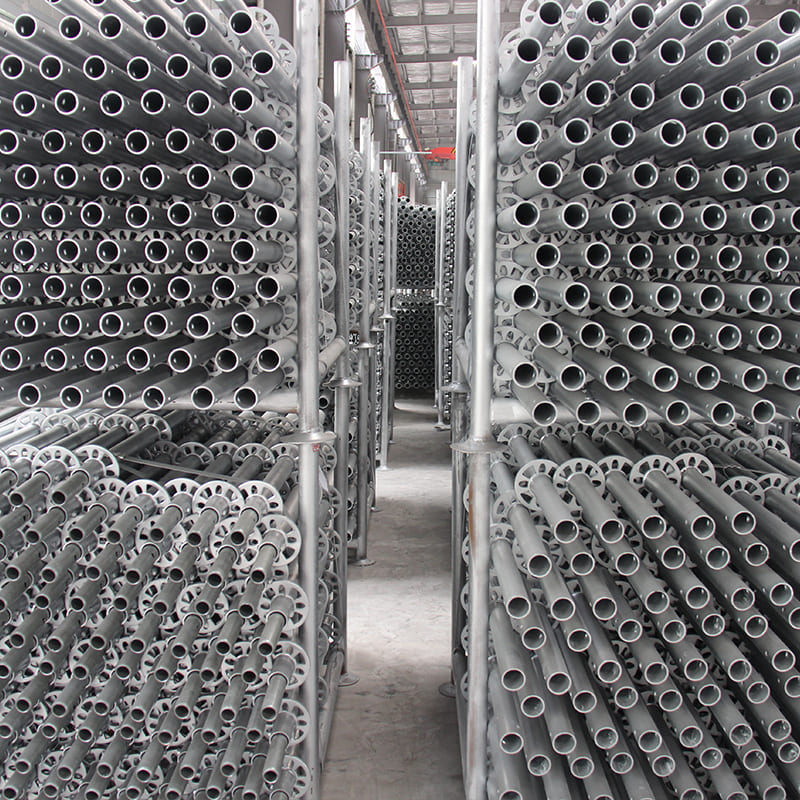
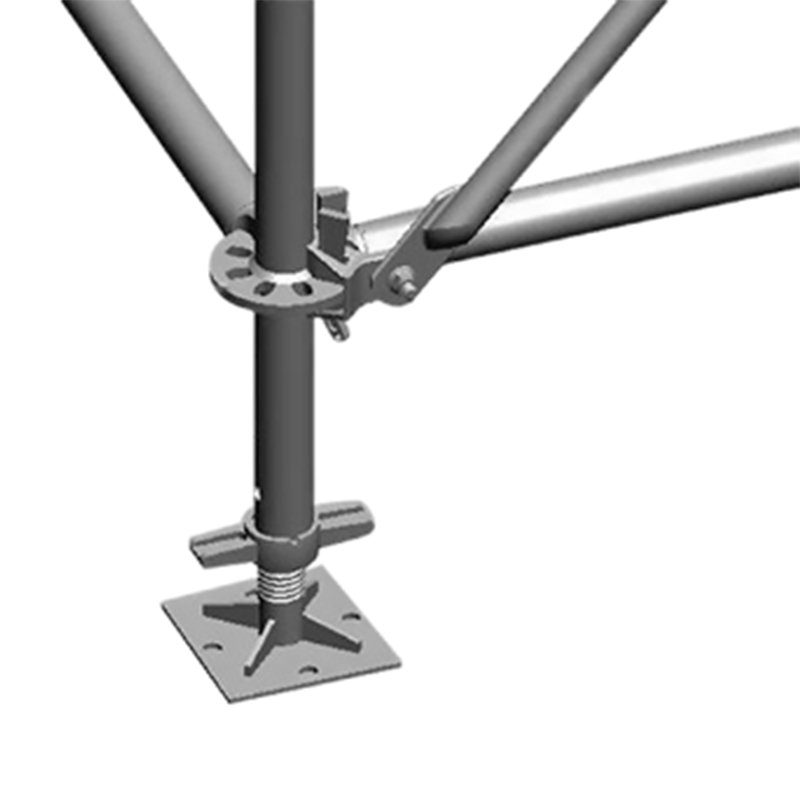
Standards (Vertical Posts). These are the primary vertical tubes that transfer the entire dead and live load of the scaffold down to the base plates and the ground. Standards determine the maximum height the scaffold can reach and how much weight each bay can support. In modular systems like Ringlock, standards come with pre-welded connection rosettes spaced at regular intervals, typically every 50 centimeters, to facilitate rapid assembly. The spacing of these rosettes determines the vertical increments at which ledgers and braces can be attached, giving the system its characteristic flexibility.
Ledgers (Horizontal Members). Running parallel to the building face or structure, ledgers connect the standards along the length of the scaffold. They serve a dual purpose: distributing horizontal loads across the structure and preventing the scaffold frame from twisting or leaning. In the Ringlock system, a single ledger design can serve as a structural transom, a guardrail, or a support for steel planks, demonstrating the versatility of well-designed modular components. The length of ledgers determines the bay width, which in turn affects the scaffold's load capacity and stability.
Transoms and Cross Braces. Transoms sit perpendicular to the ledgers and directly support the working platforms or scaffold boards. Cross braces, typically arranged in an X pattern between standards, provide the diagonal stiffness essential for preventing the frame from racking sideways under lateral loads such as wind or uneven material placement. The swiveling wedge heads on diagonal braces allow them to lock onto standards at various angles, enhancing rigidity across the entire structure. Without proper bracing, a scaffold could collapse under horizontal forces, making this component critical for structural integrity.
Key Connection and Support Components
Beyond the three main elements, several other components are critical for a complete scaffolding system.
Couplers and Connections. These are the joints that hold the scaffolding together. In modular systems like Ringlock, the connection point is typically a rosette welded onto the standard, featuring eight holes that allow ledgers and braces to be attached at 90-degree intervals and wider angles. A captive wedge driven into place with a hammer secures each connection, eliminating the need for bolts, screws, or loose pins. This design significantly speeds up assembly and reduces the risk of lost components. In traditional systems, couplers come in several varieties: right-angle couplers for perpendicular connections, swivel couplers for angled connections, and putlog couplers for attaching scaffolds to existing structures.
Scaffold Boards and Planks. These are the walking surfaces for workers. Materials range from traditional timber to steel and aluminum. Modern steel planks often feature perforated surfaces for drainage, preventing ice formation and dirt accumulation, and are secured with wind-latches to prevent accidental tilting. The choice of plank material affects the scaffold's overall weight, load capacity, and maintenance requirements. Timber boards are economical but require regular inspection for rot and damage. Steel and aluminum planks cost more upfront but offer longer service life and consistent performance.
Base Jacks and U-Heads. Base jacks (screw jacks) are adjustable feet placed under the standards to compensate for uneven ground and provide a level foundation. U-heads (U-head jacks) are placed on top of standards to support timber beams or formwork systems during concrete pouring. Both allow for precise height adjustments, often with a total extension of up to 140 centimeters. Proper adjustment of base jacks is essential for distributing loads evenly and preventing localized overloading that could cause failure.
Toe Boards and Guardrails. While sometimes overlooked, these safety components are mandatory on most job sites. Toe boards prevent tools and materials from falling off the platform, protecting workers below. Guardrails provide a physical barrier at the edge of the working platform, reducing the risk of falls. Most modern scaffolding systems incorporate dedicated attachment points for these safety features.
Ladders and Stair Towers. Access to elevated platforms requires safe climbing routes. Some scaffolding systems incorporate built-in ladder frames, while others use separate stair tower modules. Stair towers offer safer and more comfortable access for workers carrying tools, and they can also serve as emergency evacuation routes.
Material Science: The Steel vs. Aluminum Decision
The choice of material for scaffolding components significantly impacts performance, cost, and longevity. Two materials dominate the market: steel and aluminum.
Steel Scaffolding
Steel is a common choice for many heavy construction applications, particularly those involving concrete pours, stone cladding, or industrial maintenance. High-strength steel grades, such as Q355 and Q235, are frequently used in heavy-duty scaffolding and shoring systems because they offer high load capacity with minimal deflection under load. The elastic modulus of steel (approximately 200 GPa) provides excellent stiffness, meaning that steel scaffolds maintain their geometry even under heavy loads.
Steel scaffolding is typically hot-dip galvanized to protect against corrosion. This process coats every surface of the component, inside and out, with a layer of zinc. The result is a durable finish that can withstand years of exposure to the elements, making it suitable for long-term projects or systems intended for repeated reuse across multiple job sites. The galvanized coating also provides some resistance to mechanical damage, as the zinc layer can absorb minor impacts without exposing the underlying steel to corrosion.
Steel components offer high strength and rigidity, making them the preferred choice for heavy-load applications. Their weight, while greater than aluminum alternatives, is a direct result of the material density that provides superior load-bearing capacity and durability. This weight is effectively managed through proper handling procedures and equipment planning, and the long-term performance benefits typically outweigh the initial handling considerations.
Aluminum Scaffolding
For projects requiring frequent repositioning or for lighter-duty indoor work, aluminum offers significant benefits. Commonly using 6061 or 6063-grade aluminum alloys, these systems are much lighter than steel, allowing for faster assembly and easier handling by workers. Aluminum components are significantly lighter than steel equivalents, making them easier to handle and reducing the need for heavy lifting equipment during assembly.
Aluminum does not rust, which reduces maintenance costs. However, care must be taken to prevent galvanic corrosion when aluminum components come into contact with certain other metals, particularly in damp conditions. The elastic modulus of aluminum (approximately 70 GPa) is roughly one-third that of steel, meaning that aluminum scaffolds deflect more under load. This characteristic is typically addressed by using larger diameter tubes or thicker walls in aluminum scaffolding designs.
The lower strength-to-weight ratio of aluminum means that aluminum scaffolds generally have lower load capacities than steel scaffolds of similar size. For this reason, aluminum is best suited for light-duty applications such as maintenance, painting, and indoor work where heavy material loading is not required.
Surface Protection and Finishes
The longevity of scaffolding is heavily dependent on its surface treatment. Hot-dipped galvanization is the industry standard for steel scaffolding, providing a tough, metallurgically bonded coating that resists impact and abrasion. Powder coating offers an alternative, allowing for color coding of different component types while adding a layer of corrosion resistance. Both treatments significantly extend the service life of equipment.
In addition to galvanization, some manufacturers offer painted finishes for scaffold components. Paint provides a lower level of corrosion protection but can be useful for color-coding components to simplify assembly or for temporary applications where long-term durability is not a concern. Regular inspection and maintenance of surface finishes are essential for preventing corrosion and extending equipment life.
Core Systems and Applications
Different project requirements call for different scaffolding systems. The choice depends on factors such as building geometry, required load capacity, speed of erection, and the nature of the work.
Ringlock Scaffolding System
Technical Features. Ringlock is a modular system defined by its rosette connection point. The system uses a small number of core component types—standards with welded rosettes, ledgers, and diagonal braces—to create a wide variety of configurations. Assembly is fast and secure; components are simply placed into the rosette and locked with a hammer-driven wedge. The system boasts high load-bearing capacity and is available in M48 and M60 standards for different load classes.
One of the key advantages of Ringlock is its versatility. The eight-hole rosette allows components to be attached at a range of angles, enabling the system to accommodate complex geometries. This makes Ringlock suitable not only for standard scaffolding but also for shoring applications, where the ability to adjust spacing and angles is essential.
Best Applications. Ringlock's flexibility makes it suitable for a vast range of applications, including:
- Scaffolding for facade works (bricklaying, painting, window installation)
- Birdcage scaffolding for large open areas such as atriums
- Shoring for slab formwork
- Heavy-duty support for industrial plants and power stations
Ringlock's modular geometry also makes it well suited for vertical access solutions such as stair towers, where consistent bay dimensions and secure connections are essential for frequent use.
H-Frame Scaffolding System
Technical Features. H-Frame scaffolding consists of pre-welded frame units shaped like the letter "H". These frames stack vertically and are connected horizontally by cross braces that lock into place with pins or spring clips. It is a straightforward, cost-effective system known for its ease of use and quick erection.
The simplicity of H-frame scaffolding makes it an attractive choice for projects where speed and low cost are primary considerations. The pre-welded frames reduce the number of individual components that need to be handled, and the stacking design allows for rapid vertical extension.
Best Applications. This system is widely used for straightforward projects where simplicity and speed are valued. Typical applications include:
- External and internal access for high-rise buildings
- Main support for table formwork systems in combination with other shoring
- Light to medium-duty construction tasks
H-Frame is commonly used as an access scaffold around building halls and large structures, or as part of a combined support system for light to medium loads. In many regions, H-frame scaffolding remains the most commonly used type due to its low cost and availability.
Hydraulic Climbing Systems
Technical Features. For high-rise and complex structures, hydraulic climbing systems represent a major advance in efficiency and safety. These systems integrate formwork, climbing brackets, and platform systems that self-advance vertically using hydraulic cylinders. Once concrete reaches the required strength, the formwork is stripped and the entire assembly is hydraulically lifted to the next level along guide rails. This process repeats for each floor.
The GETO GTP100 automatic hydraulic climbing formwork system exemplifies this approach. It provides a fully enclosed construction environment, reducing the risks of falls from heights and falling objects. The system includes features such as formwork retraction gears to prevent concrete grout leakage and synchronized operation to ensure smooth vertical movement.
Hydraulic climbing systems are particularly valuable for tall buildings where traditional scaffolding would be impractical. They eliminate the need for dismantling and reassembling the scaffold at each floor level, saving significant time and labor costs. The fully enclosed working platform also protects workers from the elements and prevents debris from falling to lower levels.
Best Applications. Climbing systems are essential for:
- Core and shear walls in high-rise buildings
- Facade walls
- Bridge towers and signal towers
- Large columns and silos
- Chimney construction
Shoring and Specialty Support Systems
Truss Shoring. Designed for situations where ground support is unavailable or impractical, such as crossing roads or rivers, or supporting structures over irregular terrain. Truss shoring uses heavy-duty steel trusses to bridge spans and support loads above. These systems can be customized to accommodate virtually any span length and load requirement.
Steel Props. These are adjustable vertical supports used to hold formwork in place during concrete pouring. They are typically used in combination with other shoring systems to support floor slabs. Adjustable screw jacks at the top and bottom allow for fine-tuning the height, ensuring proper alignment of the formwork system.
Cantilever Scaffolding. In situations where the ground cannot support a scaffold, cantilever systems provide an alternative. These systems are supported by beams anchored into the building at a lower completed floor level, projecting outward where ground support is unavailable. This approach is commonly used for retrofitting older buildings or for projects built over busy streets.
The Value Proposition: Why Scaffolding Outperforms Alternatives
Scaffolding offers distinct advantages over other access methods like ladders or man lifts, particularly in long-term or heavy-duty applications.
Safety
Scaffolding provides a stable, expansive work platform with integrated guardrails and toe boards. This platform supports multiple workers and holds tools and materials securely, creating a much safer working environment than ladders or bucket lifts. Modern systems often include designated anchorage points for personal fall arrest systems (PFAS), further enhancing safety.
The reduced fall risk associated with proper scaffolding is one of the strongest arguments for its use. Falls remain a leading cause of death in the construction industry, and any measure that reduces this risk contributes to safer job sites.
Productivity
A well-designed scaffold allows for parallel work. Multiple platforms can be erected simultaneously, enabling different trades to work on different levels of a building at the same time. This reduces downtime and eliminates the queueing effect that often occurs with single-point access lifts. The use of "bridging" also allows crews to move horizontally across the scaffold, connecting different work areas without returning to ground level.
On large projects, the productivity gains from scaffolding can be substantial. A scaffold that covers an entire facade allows multiple teams to work across the building face simultaneously, compressing the construction schedule significantly.
Flexibility and Accessibility
Scaffolding can be customized to fit virtually any building shape or site condition. Modular systems like Ringlock adapt easily to complex geometries and tight corners. The scaffolding structure itself can provide access for both workers and materials, with options for integrated stair towers and material hoists.
This flexibility extends to the ability to add or remove sections as the project progresses. For example, a scaffold can be extended upward as a building rises, or sections can be removed to accommodate new construction phases.
Scaffolding vs. Ladders and Man Lifts
While ladders are portable and inexpensive, they are not suitable for extended work at height. They offer a small platform, limit material handling, and present a significant fall hazard. Man lifts provide a stable platform but require a constant power source and can only reach specific points. Scaffolding, in contrast, provides a large, stationary work surface that covers a significant portion of the building facade, supporting multiple workers and their tools simultaneously. For jobs lasting more than a few hours, a properly erected scaffold is often the safer and more productive choice.
Safety, Risk Management, and Regulations
Scaffolding, while essential, is not without risks. Effective management of these risks requires a system of training, inspection, and environmental awareness.
Environmental Challenges. Open scaffolding is vulnerable to the elements. High winds create additional side loads that can destabilize the structure. Experienced site supervisors monitor weather forecasts and implement site-specific guidelines, including stopping work when wind speeds exceed recommended thresholds. Heavy rain can make planks slippery and create ice in colder conditions. Many site safety plans reference the Beaufort scale, with operations typically suspended when wind speeds reach Force 6 (about 39 km/h) or above, depending on the scaffold configuration and local regulations.
In addition to wind and rain, lightning poses a threat to elevated metal structures. Scaffolds can be fitted with lightning protection systems in areas prone to thunderstorms. Sun exposure can also affect worker safety, and scaffolding should incorporate shade provisions where possible.
The Importance of Inspection. A scaffold is only as safe as its last inspection. Regular inspections by a competent person are mandatory. Inspectors must check for:
- Secure connections (all wedges locked, pins in place)
- Sound base plates and mud sills
- Undamaged planks and guardrails
- No unauthorized modifications or additions
- Proper anchoring and bracing
- Signs of corrosion or wear
Inspection frequency is typically specified by local regulations and project-specific safety plans. Daily visual inspections and more detailed weekly or monthly inspections are common practice.
Training and Competence. No worker should erect, dismantle, or use a scaffold without proper instruction. Many jurisdictions require certified scaffold erectors for structures above a certain height. Unauthorized alterations or the removal of safety components like guardrails are a leading cause of accidents. A robust safety culture, built on clear protocols and consistent enforcement, is essential for preventing falls and other scaffold-related incidents.
Training programs typically cover load limits, connection methods, bracing requirements, and the proper use of personal protective equipment. Ongoing refresher training helps maintain safety awareness and introduces new practices or equipment as they become available.
Industry 4.0: Digitization and Smart Scaffolding
The integration of digital tools is transforming how scaffolding is planned, managed, and inspected, moving the industry from traditional methods to intelligent construction.
Industrial 3D Design Software Integration. Advanced 3D design software is increasingly used to plan temporary works, including scaffolding. These platforms allow engineers to create detailed digital models of scaffolding structures integrated with the building design. Automated algorithms can analyze daily construction site conditions, generate required scaffolding configurations, and identify potential clashes with permanent building elements before any physical work begins. GETO's 3D design tools, for instance, perform clash detection between temporary scaffolding and permanent structures, helping to identify potential interferences before fabrication begins.
3D Model Visualization and QR Codes. Digital platforms now allow project managers to visualize the scaffolding structure in 3D, integrated with the building model. QR codes placed on scaffolding components can be scanned to quickly locate materials, verify their placement against the digital model, and confirm assembly procedures. This streamlines the logistics and reduces on-site confusion.
Information Management Systems (GT-MS). Comprehensive management systems integrate design data, supply chain logistics, engineering data, and financial flows into a single platform. This provides end-to-end visibility and allows for real-time risk monitoring. The system can flag potential bottlenecks in material delivery or highlight deviations from the schedule or safety plan.
Automated Design and Material Optimization. Beyond visualization, digital tools are now capable of optimizing scaffold designs for material efficiency. By analyzing the building geometry and the required load paths, software can recommend the minimum amount of scaffolding needed for a given task. This reduces material waste and lowers project costs.
The Whole-Chain Service Ecosystem
Selecting a scaffolding supplier involves more than just comparing product prices. A full-service partner offers value across the entire project lifecycle.
Consultation and Customized Design. The process begins with a detailed analysis of the project's drawings and requirements. A good supplier performs structural calculations to recommend the appropriate system and component sizes, ensuring the scaffold meets all load and safety standards. This step helps avoid costly over-engineering or under-specification.
Smart Manufacturing and Global Supply. Reliable delivery is critical to maintaining project schedules. Suppliers with multiple global manufacturing facilities, like GETO with its 12 production bases, can ensure consistent supply and reduce shipping times for international projects. This capacity is especially important for large-scale projects requiring vast quantities of material.
On-Site Technical Support and Refurbishment. Even the best-designed scaffold can encounter issues during assembly. On-site technical guidance ensures correct installation and helps solve problems promptly. Additionally, a full-service supplier will offer refurbishment services, cleaning, repairing, and re-galvanizing used equipment. This not only extends the life of the investment but also supports a circular economy approach in construction.
Conclusion
Selecting the right scaffolding system requires a careful evaluation of project-specific needs: load capacity, construction schedule, and safety requirements. By 2026, the options available range from versatile modular systems like Ringlock, which can cut up to 50% of material usage in shoring applications, to high-tech hydraulic climbing solutions that self-propel up the face of a skyscraper. The common thread linking all of these systems is their critical role in ensuring efficiency and worker safety.
For contractors and project owners, the ideal partner is one that provides more than just hardware. They need a supplier capable of delivering a complete solution: design consultation, precision manufacturing, timely global delivery, and on-site technical support. Choosing a provider with a proven track record and international certifications offers peace of mind.
GETO has established itself as a comprehensive formwork and scaffolding solutions provider. Backed by a global manufacturing network and a commitment to quality, [ geto ] supports projects from initial design to final dismantling. To discuss specific project requirements or request a customized quotation, reach out to the team. The contact email is geto_market@geto.com.cn.